Lighthouse Lymphedema Network
Shining a Light On Lymphedema

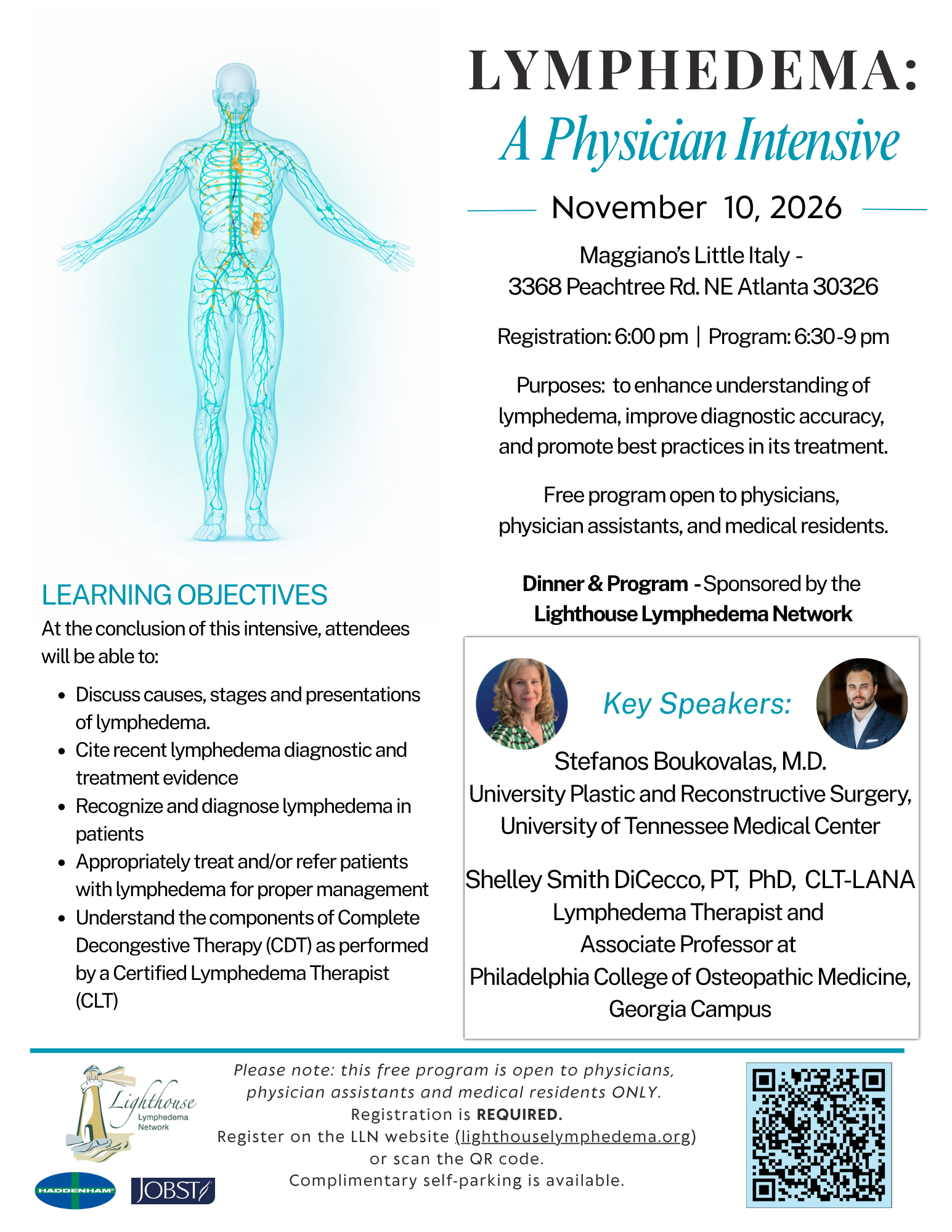



Lymph Fluid Microcirculation in the Interstitial Tissues Under Your Skin

Therapists talk about lymph fluid collecting in the interstitial tissues or interstitium under our skin. How is this fluid removed by our lymphatic system?
Fluid and nutrients leave blood stream capillaries and travel through the interstitium to one’s tissues or cells. Then the excess fluid and waste travel slowly through the interstitium to collecting lymphatic vessels, starting with initial lymphatics in the upper levels of the skin.
The lymph fluid moves up the extremities through larger vessels deeper in the tissues, called collectors, passing through lymph nodes along the way. The lymph nodes filter the lymph fluid and help alert the immune system when they encounter foreign cells.
Any lymph fluid that is not returned to the venous system at the lymph nodes will continue to make its way slowly to the neck region and eventually empty into one of the large left-sided veins at the brachiocephalic vein arch.
Photo of the interstitial tissues and information provided by Dr. Shelley DiCecco.
Photo aided by Chat GPT.
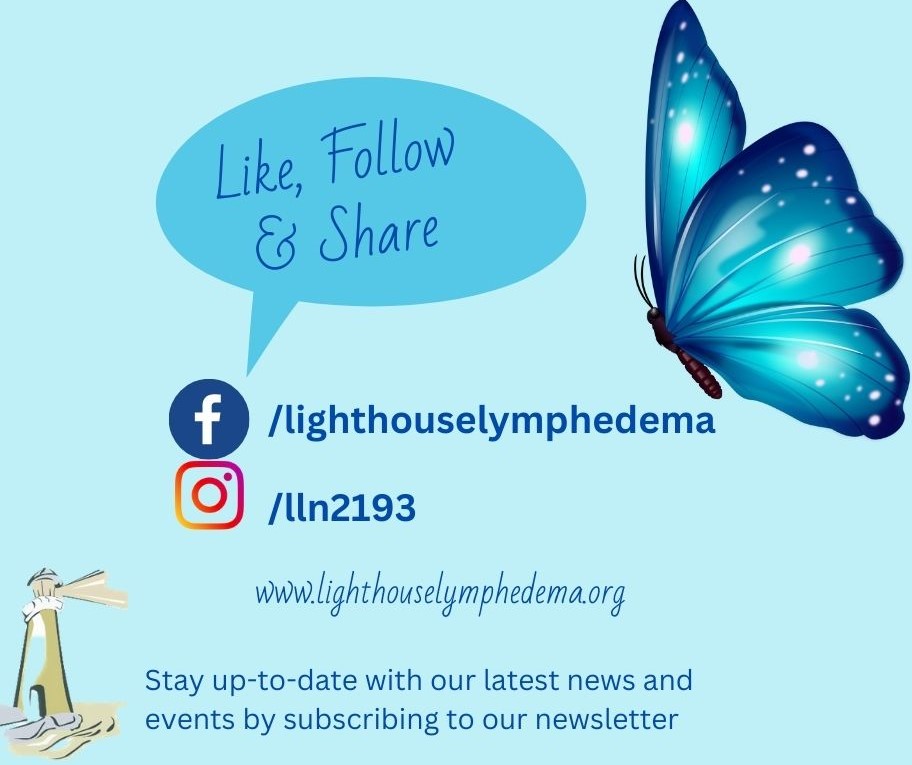
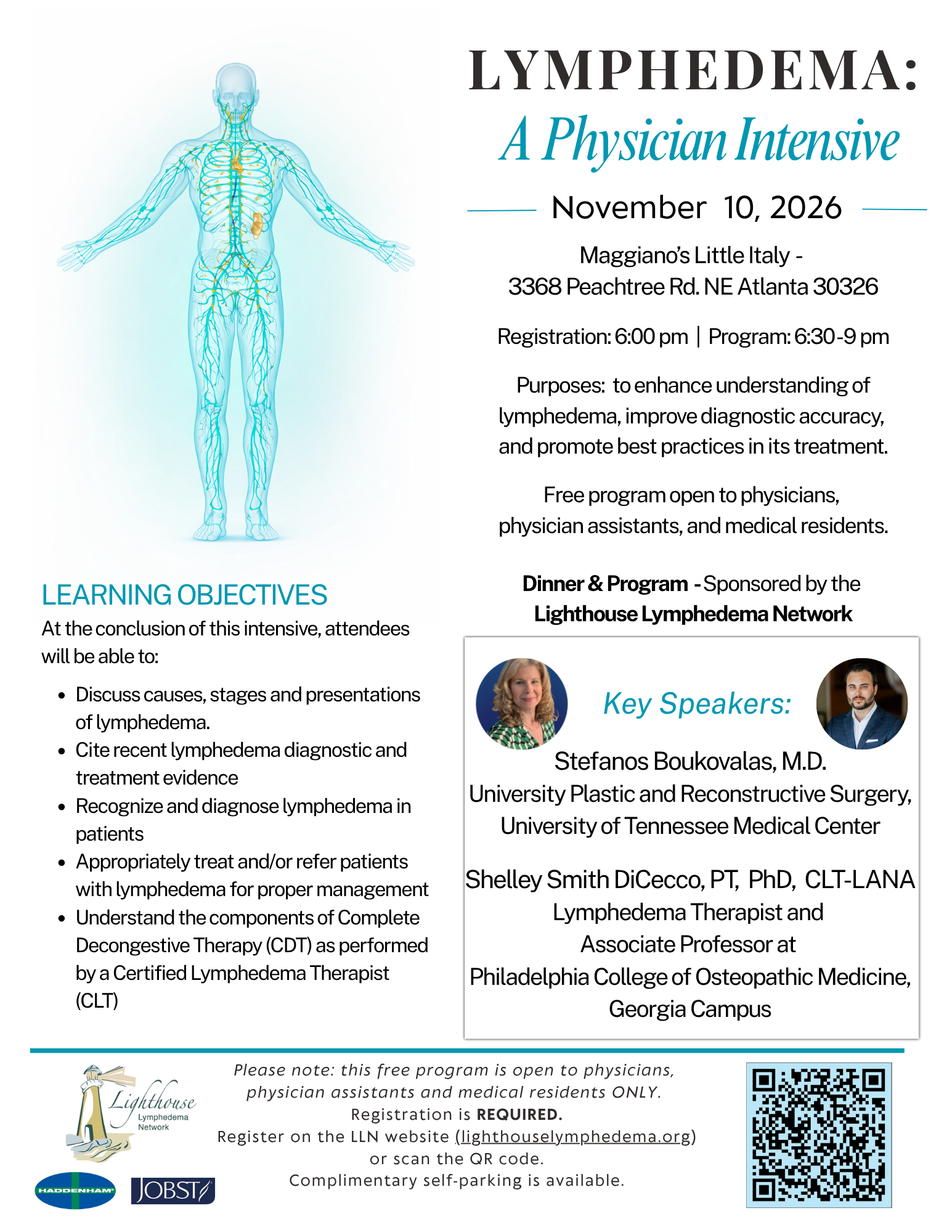
Lymphedema: A Physician Intensive
Tuesday, November 10, 2026
The LLN announces LYMPHEDEMA: A Physician Intensive on Tuesday, November 10, at Maggiano's Little Italy, 3368 Peachtree Road NE, Atlanta. This free dinner program is designed specifically for physicians, physician assistants and medical residents in all disciplines. The evening will provide attendees with a deeper understanding of lymphedema and best practices in diagnosising and treating lymphedema. Our key speakers are Dr. Stefanos Boukovalas and Dr. Shelley Smith DiCecco.
A HUGE Thank You to Our Partners

The LLN is thrilled to announce that Georgia Alliance for Breast Cancer (GAABC) has granted the LLN Bandages and Garments Fund $10,000 for the grant year 2026-2027. These funds will be used to provide necessary compression supplies to underserved breast cancer survivors who have lympehdema. Since 2013, Georgia Alliance for Breast Cancer (GAABC) grants have helped the LLN serve approximately 350 individuals with breast cancer-related lymphedema. Thank you GAABC for helping us to continue serving our community!
Stay tuned for news on how to join us at the LLN Cheering Station where we encourage the walkers of the GAABC 2-Day Walk in October!

The Southern Loss Association (SLA) hosted the 2026 Larry Hart Memorial Spring Golf, Cornhole, and Pickleball Outing at Chateau Elan on Thursday, April 23. Each spring, the SLA sponsors this fun and well-attended event benefiting the LLN. This year’s outing raised $4,690 in support of the LLN’s mission. Larry Hart, late business partner of Doug White, was a dedicated supporter of both the SLA and the LLN whose legacy continues through this event. Participants enjoyed a day of friendly competition and camaraderie while giving back. Thank you to the SLA and all attendees for their continued generosity and commitment to making a difference!
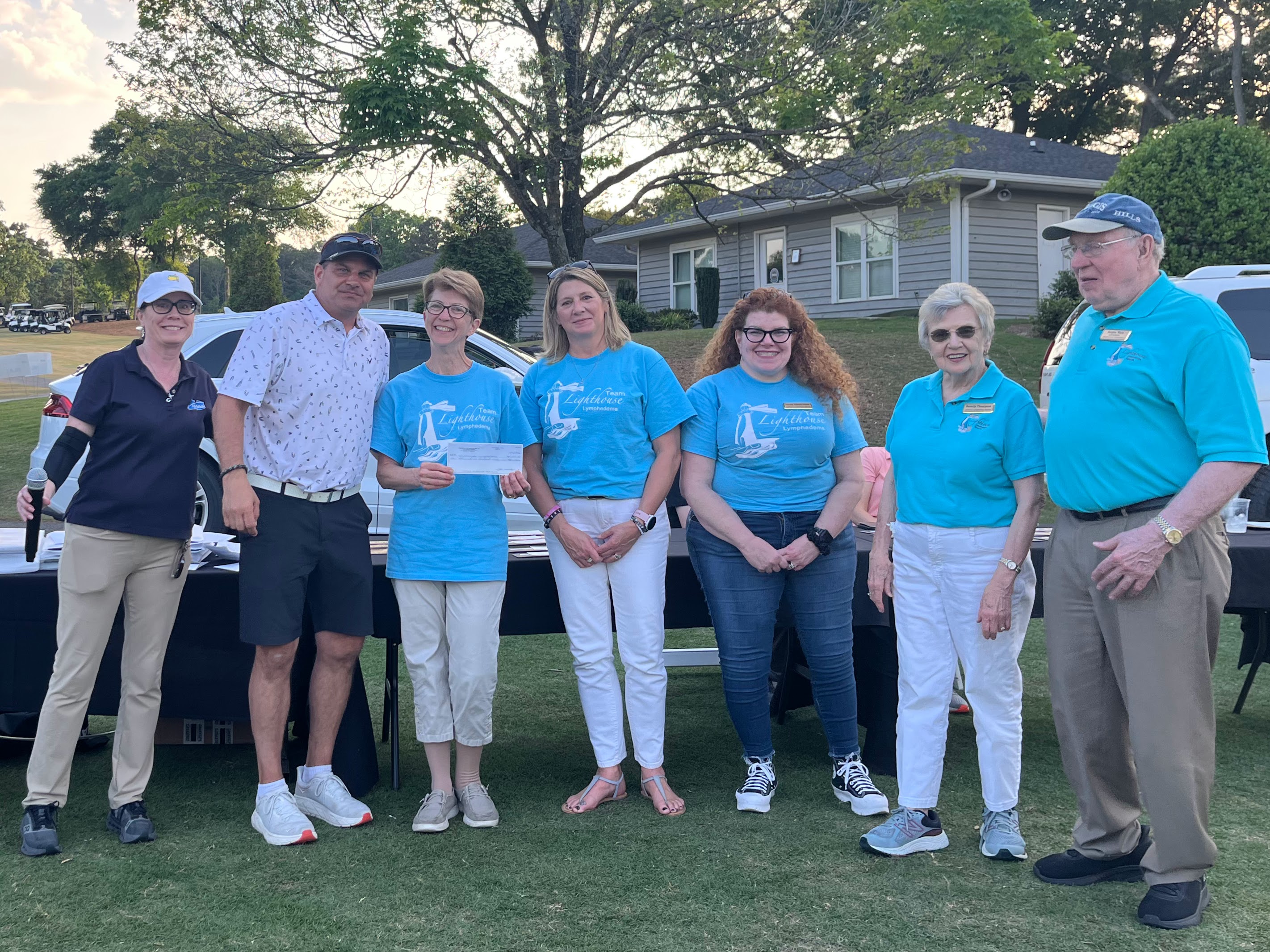
Susan Freeman, Tournament Chairperson; Stephen Phillips, President, SLA; Deb Cozzone, Maureen Clark, Francine Schwartz Schuler, Beverly Thompson, Doug White
Your Contributions help the Lighthouse Lymphedema Network bring internationally-recognized researchers and medical providers to Atlanta for our yearly conferences. Thank you for helping patients and therapists learn more about cutting-edge research and treatments that can improve quality of life for every person.
We now know that every case of inflammation, every illness, every good night’s sleep, and the digestion of every meal is supported by our lymphatic system. Our invisible lymphatics enhance our lives in ways we are only beginning to understand.
Thank you for helping us make the invisible visible!
~The Lighthouse Lymphedema Network Board
Join Team Lighthouse for the Sisters By Choice Pink Ribbon 5K Run-Walk
 Lighthouse Lymphedema Network volunteers have formed a team for the Sisters by Choice annual Pink Ribbon 5K Run-WalkSisters by Choice annual Pink Ribbon 5K Run-Walk on Juy 18 at Piedmont Park. The Pink Ribbon 5K raises raise money and awareness to address disparities surrounding breast cancer services. All proceeds from the race will fund the SBC Mobile Breast Clinic, which travels throughout Georgia to help medically underserved men and women gain access to quality breast care.
In addition to forming a team with in-person and virtual participants, the LLN will also have an exhibitor's booth to share information and resources with walkers and attendees. Show your support and join Team Lighthouse today!
Glymphatic Basics and the Endothelial Glycocalyx
M Mark Melin, MD, FACS, RPVI, FACCWS is the Medical Director of the Gonda Vascular Center Wound Clinic at the Mayo Clinic, Rochester, MN. Read more about Dr. Melin
Recent imaging improvements let us see the lymphatic or glymphatic system within the brain’s meninges, or protective coverings. A lymphatic field includes hundreds of lymphatic capillaries surrounding its nodes.
Lymphatic drainage from the head is different from other parts of the body. As brain tissue becomes stiff due to age or illness, fluid builds up like water in a sponge. The glymphatics must be stimulated, or at least not impeded to initiate drainage or flushing. This often occurs during REM sleep.
The brain holds approximately 40% of the eight liters of lymphatic fluid produced daily, making glymphatic drainage crucial to our health. Researchers are investigating whether manual lymphatic drainage applied at the base of the neck and upper chest can enhance the movement of fluid out of the head or brain.Photo Credit: Haeren, Roel & van de Ven, Steffi & Zandvoort, Marcus & Vink, Hans & Overbeeke, Jacobus & Hoogland, Govert & Rijkers, Kim. (2016). Assessment and Imaging of the Cerebrovascular Glycocalyx. Current neurovascular research. 13. 10.2174/1567202613666160504104434.
The endothelial glycocalyx layer lines all vessels of the circulatory system. A healthy endothelial glycocalyx allows fluid to flow in one direction - out into the interstitial tissue from the capillary beds - but prevents its return to or reabsorption by the venous system. This is the essential component of the Revised Starling Principle. Breakdown of the endothelial glycocalyx is a problem in wound care as well as other disease processes, like diabetes and immobility. Read more
Brain Lymphatics and Neuro-Lymphatic Therapy
Keynote Speaker, Carmen Recupero, BS, LPTA, CMT, CLT, is a certified massage and lymphedema therapist who teaches CLTs about new research and therapies for brain lymphatics, or “Glymphatics.” Read more about Carmen Recupero
Glymphatic vessels drain fluid from around the brain. This fluid often contains proteins that are associated with Alzheimer’s disease. Several diseases or conditions involving the brain are associated with fluid buildup or inflammation, including Multiple Sclerosis, ADHD, Depression, Long Covid, Alzheimer’s, Parkinson’s, Autism, Migraines, Stroke, Hardening of the Arteries, and Epilepsy. Neuro-lymphatic therapy is being researched in conjunction with other treatments for these conditions.
While neuro-lymphatic therapy does not cure these diseases, it is a non-invasive, non-pharmaceutical support for chronic aging or disrupted glymphatics. Carmen demonstrated techniques to help open the lymphatic pathways from the head and neck.
Individuals can support their own glymphatic systems byRead more about Carmen Recupero
Neuro-lymphatic therapy supports memory, focus, mood, and fluid homeostasis in the brain. Attendees at the hands-on session also reported that it feels wonderful! Read more about Neuro-lymphatic Therapy
The Lighthouse Lymphedema Network’s 27th Annual Lymphedema Education and Awareness Conference
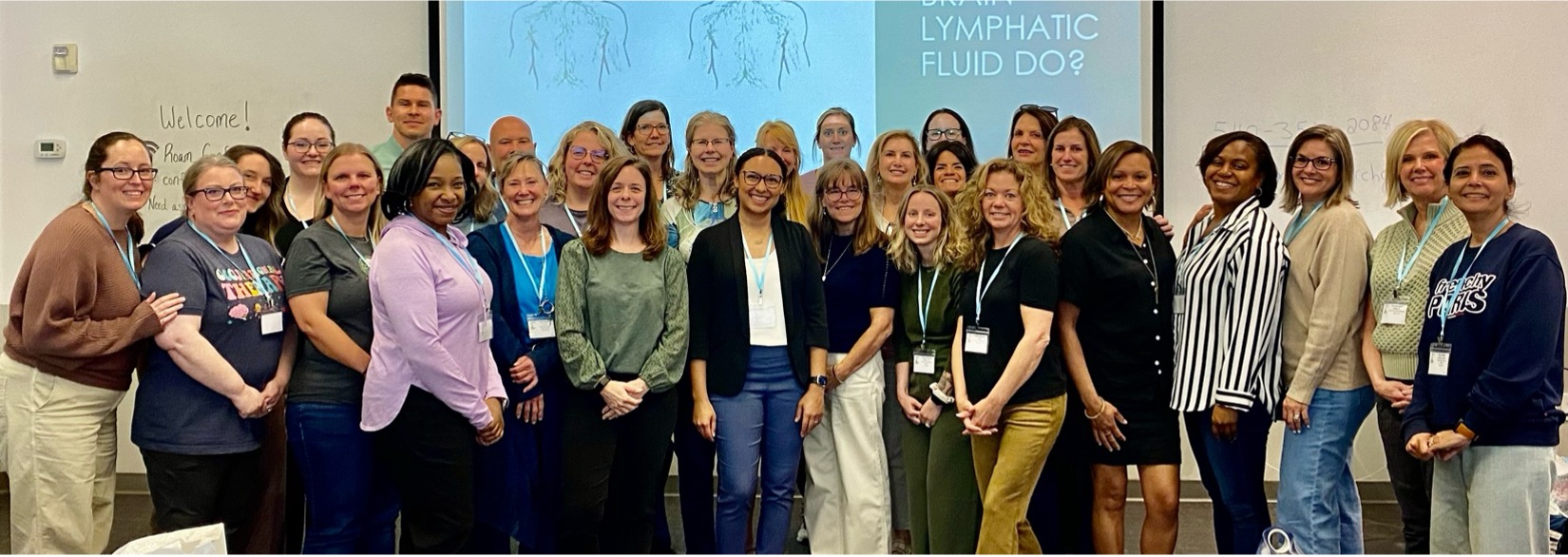
Therapists, researchers and patients gathered in Atlanta on October 17-18, 2025.
2024 Conference Speakers
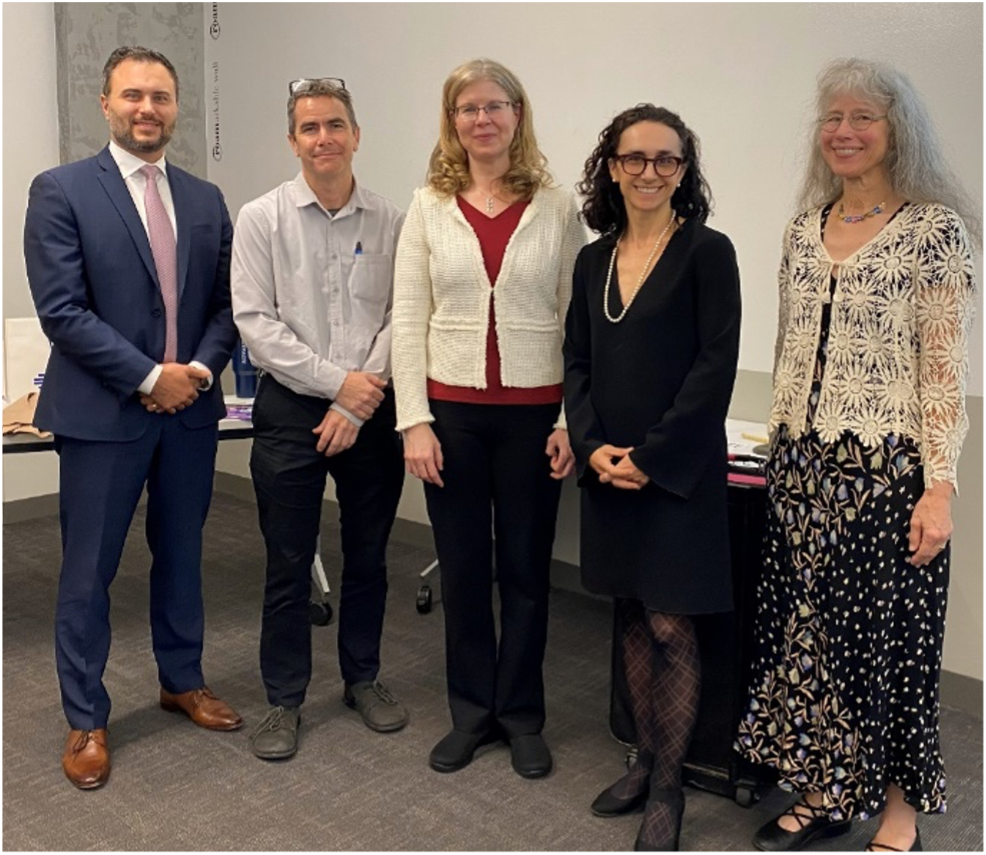
Stefanos Boukovalas, MD
Lymphedema and Lipedema Surgical Options, Requirements, and Post-Care
Robert Erkstam, OTR, CLT-LANA
Optimizing Lymphedema Outcome Through Lifestyle
Shelley DiCecco, PT, PhD, CLT-LANA, CI-CS
Signs, Symptoms, and Treatment Options for Central Lymphatic Dysfunctions
Jodi Ganz, MD
Dermatology Concerns: Lymphedema and Lipedema
Karen Ashforth, MS, OTR/L, CLT-LANA
Fibrosis Techniques for Breast Cancer, Lymphedema, and Lipedema
About Us
The Lighthouse Lymphedema Network is a 501 (C) (3) organization of individuals who are lymphedema patients, or who have an interest in lymphedema.
5290 Matt Hwy
Suite 502-135
Cumming, GA 30028
Connect With Us


