
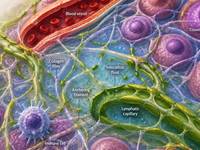
Lymph Fluid Microcirculation in the Interstitial Tissues Under Your Skin
Therapists talk about lymph fluid collecting in the interstitial tissues or interstitium under our skin. How is this fluid removed by our lymphatic system?
Fluid and nutrients leave blood stream capillaries and travel through the interstitium to one’s tissues or cells. Then the excess fluid and waste travel slowly through the interstitium to collecting lymphatic vessels, starting with initial lymphatics in the upper levels of the skin.

Dermatology Concerns with Lymphedema and Lipedema
Dr. Jodi Ganz, MD, is a dermatologist in private practice in Atlanta. She also serves on the volunteer faculty at Emory University, where she teaches medical students about genital dermatology.
Doctors and patients are often reluctant to examine genital skin, but Dr. Ganz does find skin cancers and lymphedema in the genital regions. Patients need to be proactive and ask for this exam if their dermatologist or gynecologist doesn’t offer it. This may be more comfortable with a provider of the same gender.
Read more: Dermatology Concerns with Lymphedema and Lipedema
Your Invisible, Essential Lymphatic System
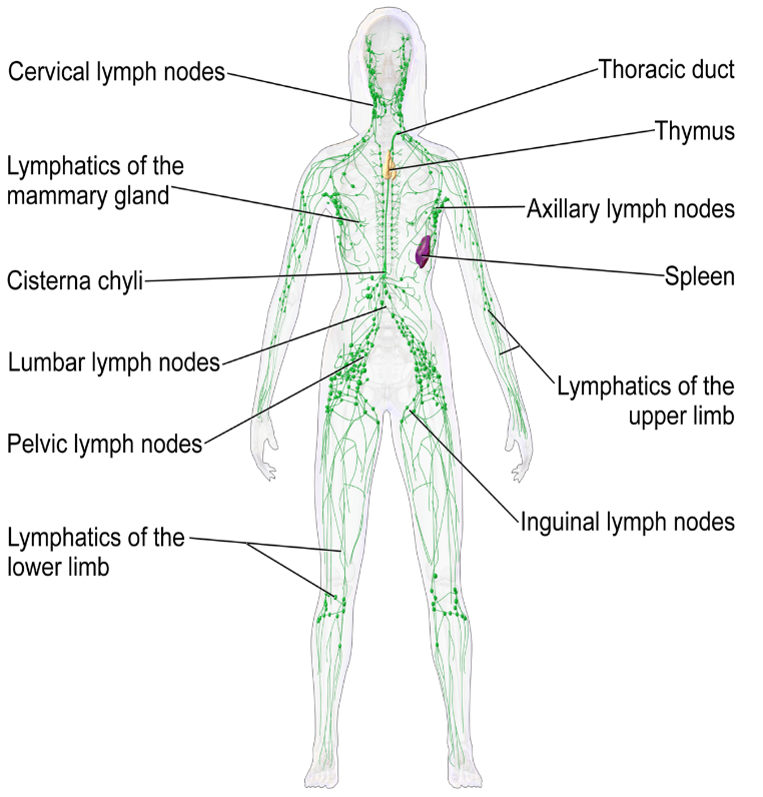 What’s the mysterious other circulatory system we know little about? One question on a biology test was all we heard about the lymphatic system in our 20th century classrooms. But with 21st century discoveries, our body’s combined transportation, cleaning, and disease-fighting system should have its own chapter in every 21st century biology textbook.
Lympha was the Roman goddess of fresh water. The human lymphatic system transports fluid and waste from all parts of the body to central collecting organs - the thoracic duct, right lymphatic duct, and cisterna chyli. Like our veins, tiny lymphatic vessels have flaps that work like check valves in a hydraulic system to move fluid in one direction - toward these central organs – see illustrations.

Diagnosis
If you’re at risk of lymphedema — for instance, if you’ve recently had cancer surgery involving your lymph nodes — your doctor may diagnose lymphedema based on your signs and symptoms.
If the cause of your lymphedema isn’t as obvious, your doctor may order imaging tests to get a look at your lymph system. Tests may include:

There are two general types of lymphedema:
- Primary Lymphedema usually appears without obvious cause or after a minor traumatic event or an infection. It can happen at any age, but is due to a congenital abnormality, usually involving malformed or missing lymph vessels. This condition may be familial.
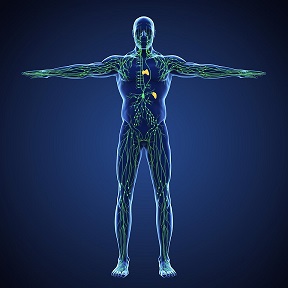
The lymph system consists of
a network of lymph vessels carrying lymph fluid to lymph nodes. The lymph vessels are located all over the body (usually next to veins) and transport lymph fluid
– excess fluid in the tissues which is filled with proteins, white blood cells, germs and cellular waste products. This fluid is carried up to the lymph nodes where it is filtered and detoxified, before being returned to the blood stream.

Lymphedema
is a swelling cause by a damaged lymphatic system. Our Body is covered with lymphatic vessels. These vessels are responsible for the transport, collection, and filtration of protein and the metabolic waste of inflammatory products in bodily fluids.
If the lymphatic system is damaged, it can no longer process sufficient fluid, causing visible swelling in your arms, legs and feet.
About Us
The Lighthouse Lymphedema Network is a 501 (C) (3) organization of individuals who are lymphedema patients, or who have an interest in lymphedema.
5290 Matt Hwy
Suite 502-135
Cumming, GA 30028
Connect With Us


